3 August 2026
Recognised as one of the UK’s Best Workplaces for Women™ 2026 by Great Place To Work UK®
We are proud to share that we've been recognised as one of...

Explore our six-step nutrient-dense meal guide:
Discover Lupa Foods’ nutrient-dense meal solutions
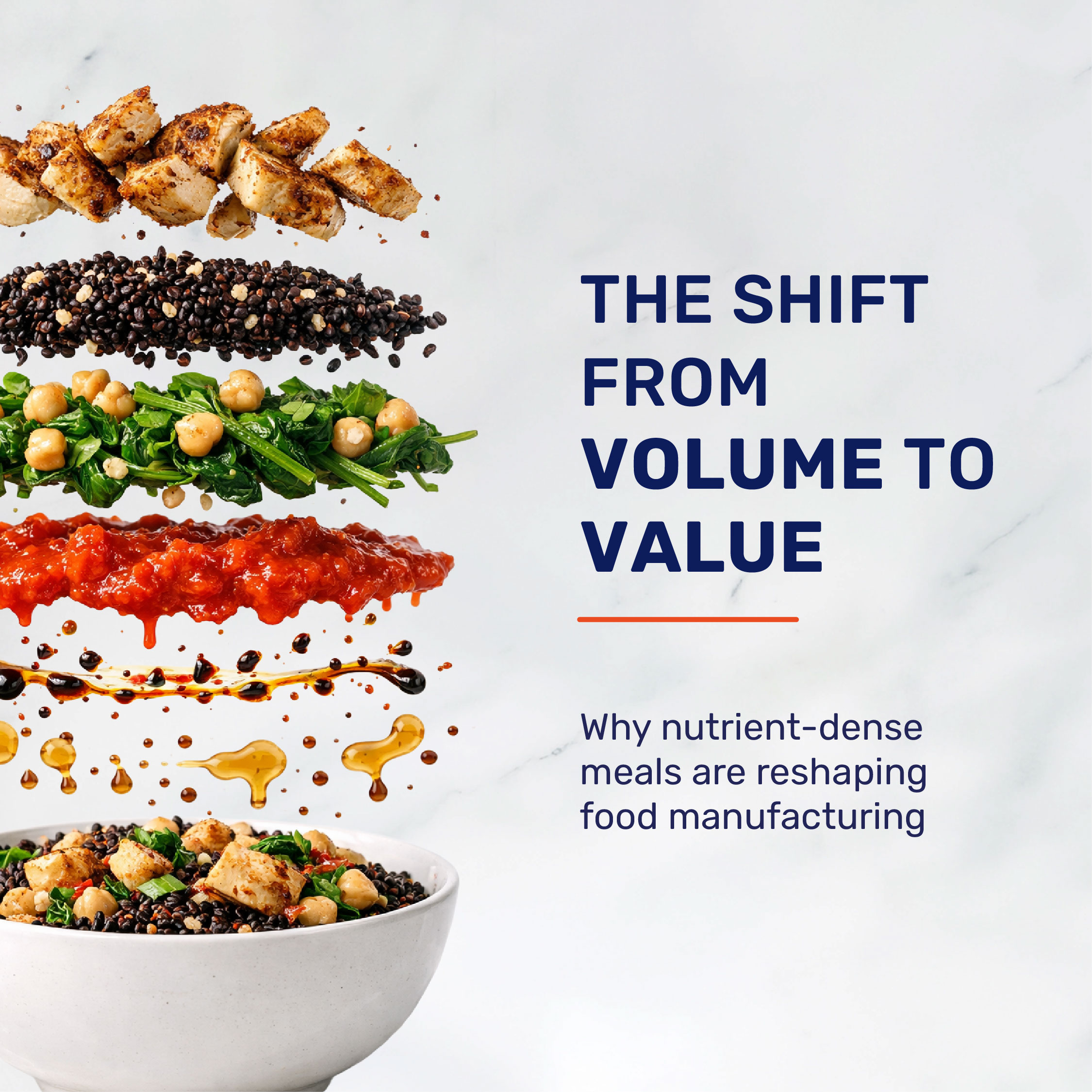
For decades, value in prepared meals was closely associated with quantity. Larger portions, heavier plates and calorie-rich formulations were often used to communicate generosity, satisfaction and value for money.
However, eating habits are changing.
A growing number of consumers are focusing more closely on what a meal delivers rather than simply how much food is on the plate. Healthier lifestyles, greater nutritional awareness and the growing use of GLP-1 products are all influencing appetite, portion preferences and expectations around food.
This creates a new challenge for the food industry.
How can manufacturers develop meals that are more nutritionally considered, appropriately portioned and lower in calories, while still delivering taste, satisfaction and value?
There is no single or simple answer. It is a challenge that manufacturers, suppliers, retailers and ingredient partners will need to work through together.
The emerging nutrient-dense model shifts the focus from the physical size of a meal to the quality and value delivered through every bite.
This does not mean that portion size is no longer important. Instead, it means that portion size must be considered alongside several other factors, including:
For manufacturers, the opportunity is not simply to produce smaller meals or products positioned as “diet” options. It is to create meals that feel deliberately designed, nutritionally balanced and satisfying.
A smaller portion should not feel like a compromise. It should still feel complete.
The rise of healthier lifestyles has already encouraged consumers to pay closer attention to protein, fibre, sugar, calories and ingredient quality.
GLP-1 products are accelerating this shift for some consumers by changing appetite and the amount of food they are able or willing to eat in one sitting. This means that smaller portions may become more relevant, but those portions still need to deliver sufficient nutrition and enjoyment.
Consumers may increasingly expect meals to work harder. A meal may need to provide meaningful nutrition, convenience, flavour and satisfaction in a more considered portion.
This presents both a technical challenge and a commercial opportunity.
Manufacturers that can respond successfully may be better placed to meet changing consumer needs, develop new propositions and strengthen the perceived value of their products.
Protein is often an important starting point in nutrient-dense meal development.
A well-chosen protein source can contribute to fullness, support a stronger nutritional proposition and provide a clear point of differentiation. However, protein should be considered as part of the complete recipe rather than treated as an isolated addition.
Fibre can play an equally important role. Pulses, vegetables, whole grains, seeds and carefully selected carbohydrate bases can improve the nutritional profile of a meal while also contributing texture, colour and substance.
The objective is not necessarily to maximise one nutrient at the expense of everything else. It is to create a balanced formulation in which protein, fibre, calories, flavour, cost and portion size work together.
One of the greatest challenges when reducing portion weight is maintaining the perception of generosity.
Consumers assess a meal visually before they taste it. A smaller product that looks sparse may be perceived as poor value, regardless of its nutritional quality.
Ingredients such as tomatoes, vegetables, pulses and leafy greens can help create colour, moisture, texture and visual volume without adding excessive calories. They can also improve the overall nutritional profile and eating experience.
This approach allows manufacturers to make portions more intelligent rather than simply making them smaller.
When there is less food on the plate, every mouthful must deliver.
Flavour density therefore becomes increasingly important. Herbs, spices, chilli, aromatic ingredients, concentrated tomato products, umami-rich components and carefully balanced sauces can help create depth and complexity.
The aim should not be to rely solely on fat, salt or sugar to deliver impact. Instead, manufacturers may need to explore how ingredient selection and flavour systems can create a stronger sensory experience within a more considered portion.
The difference between a smaller meal that feels premium and one that feels restrictive may ultimately come down to flavour.
Carbohydrates do not necessarily need to be removed to create a more nutritionally balanced meal.
Instead, manufacturers can consider the type, proportion and function of the carbohydrate base. Pasta, grains, pulses and other ingredients can be selected according to the protein, fibre, texture and calorie contribution they make to the finished recipe.
The challenge is to improve the nutritional performance of the meal without moving too far away from familiar formats that consumers already understand and enjoy.
Consumers may still want pasta, rice and grain-based meals. The opportunity is to formulate them more thoughtfully.
There is no universal formula for creating a successful nutrient-dense meal.
The right approach will depend on the category, target consumer, nutritional objectives, manufacturing process, cost parameters and desired eating experience.
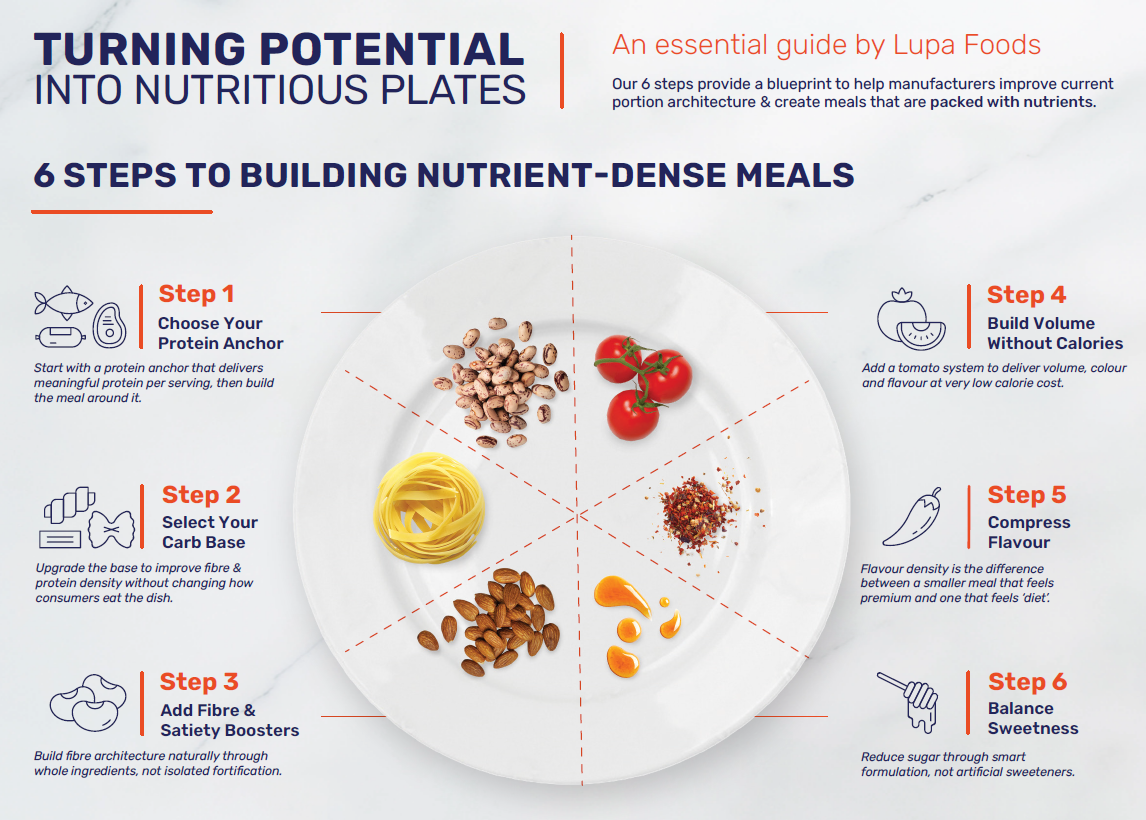
At Lupa Foods, we have developed a six-step guide as one possible way to begin thinking about the challenge:
Start with a protein source that makes a meaningful contribution per serving, then build the wider meal around it.
Consider how the base can support fibre, protein, texture and familiarity.
Explore whole ingredients such as pulses, vegetables, grains, nuts and seeds to strengthen the meal naturally.
Use ingredients such as tomatoes, vegetables and pulses to add colour, moisture and substance.
Make every bite work harder through concentrated, carefully balanced flavours.
Review where sugar can be reduced through formulation and ingredient selection, rather than relying automatically on artificial sweeteners.
This six-step guide is not intended to provide all the answers. It is simply one perspective and a starting point for discussion, ingredient exploration and product development.
The food landscape is changing quickly.
Healthier lifestyles, increased nutritional awareness and the growing use of GLP-1 products are influencing how consumers think about appetite, portion size, nutrition and value.
Lupa Foods does not claim to have all the answers to this emerging challenge. The industry is still learning, and the right solution is likely to vary significantly between categories, products and consumer groups.
However, we would welcome the opportunity to work with manufacturers as they explore what these changes could mean for their ranges.
Through our ingredient portfolio, supplier relationships and understanding of the food manufacturing sector, we can help identify ingredients that may support protein, fibre, flavour, texture, calorie and portion objectives.
We can work alongside commercial, development and technical teams to explore ideas, review existing formulations and consider how different ingredients might contribute to the wider product proposition.
The goal is not to present a fixed formula. It is to work together to test, learn and develop practical solutions for an ever-changing food landscape.
Explore our six-step nutrient-dense meal guide:
Discover Lupa Foods’ nutrient-dense meal solutions
Whether you are reformulating an existing product, developing a new range or simply trying to understand how changing eating habits may affect your category, speak to the Lupa Foods team.
Together, we can explore the ingredients and ideas that could help you achieve your goals.